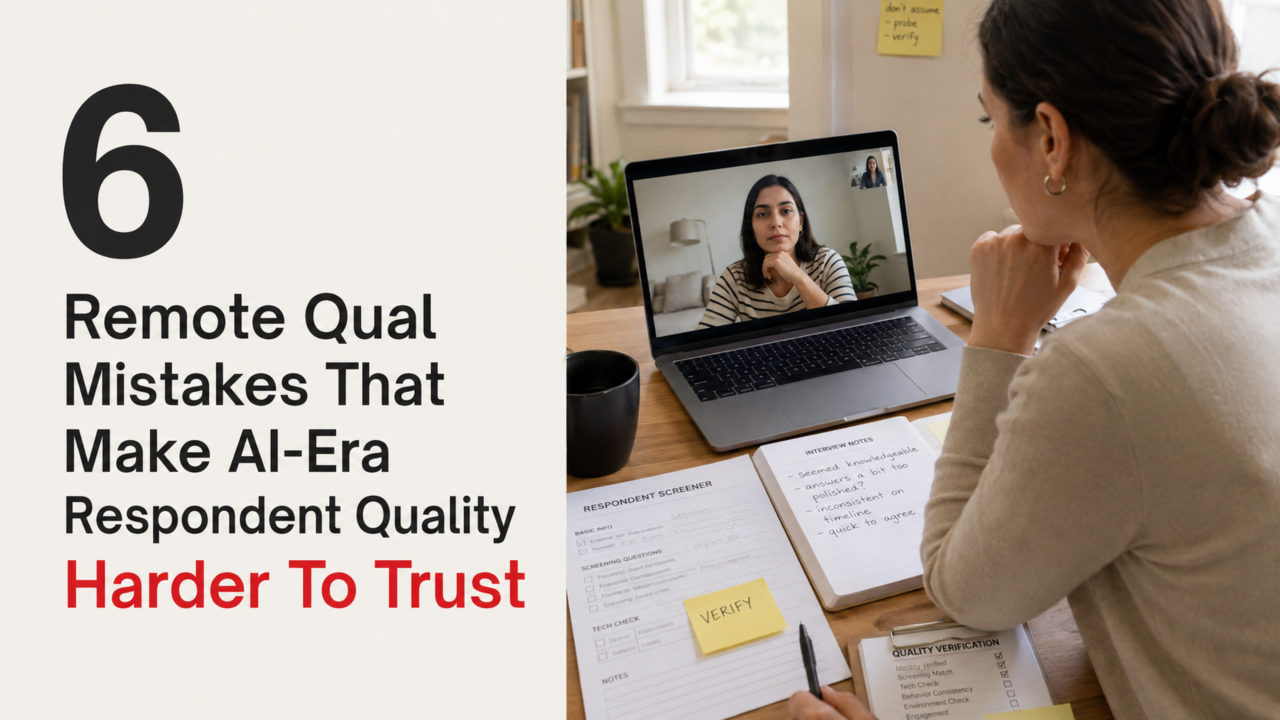
Remote qualitative research is convenient, efficient, and sometimes the only practical way to reach the right people. But it also changed the quality game. When everyone is behind a screen, verification needs to work harder. The person on the call may be perfect. Or they may be performing a very confident impression of perfect.
Here is the not-so-glamorous truth: most research problems do not explode all at once. They creep in through tiny assumptions. The audience is a little too broad. The screener is a little too easy. The incentive is a little too tempting. The timeline is a little too tight. Then suddenly a multimillion-dollar decision is leaning on interviews that feel thinner than they should.
So, in true listicle fashion, let us unpack the top 6 mistakes to watch before your next study goes live. No panic. No finger-pointing. Just the stuff smart teams fix before the project gets messy.
One more thing before we get into the list: this is not about making research teams paranoid. It is about giving them language for the risk they already feel. Verification Vanessa, the Fortune 1000 insights leader, is not trying to make recruiting harder. She is trying to make the decision safer. She needs research participant screening, respondent verification, show-rate planning, and qualitative research recruitment to work together so the final insight can survive tough questions from product, marketing, UX, healthcare, finance, and leadership.
1. Assuming remote access solves recruitment
Remote tools remove geography, but they do not remove quality risk.
You still need the right humans.
The practical fix is to write down one piece of evidence that proves the respondent belongs in the study. Not a vague label. Not a hope. One concrete reason the person can speak from real experience.
2. Not checking for AI-assisted preparation
Respondents can use tools to sound more knowledgeable than they are.
Screening should seek lived detail.
The practical fix is to write down one piece of evidence that proves the respondent belongs in the study. Not a vague label. Not a hope. One concrete reason the person can speak from real experience.
3. Skipping camera and environment expectations
For some methods, context matters. If expectations are unclear, quality can suffer.
Set participation standards upfront.
The practical fix is to write down one piece of evidence that proves the respondent belongs in the study. Not a vague label. Not a hope. One concrete reason the person can speak from real experience.
4. Letting async answers replace human nuance
Async tools are useful, but some topics need live probing.
Match the method to the decision.
The practical fix is to write down one piece of evidence that proves the respondent belongs in the study. Not a vague label. Not a hope. One concrete reason the person can speak from real experience.
5. Failing to confirm identity and fit before the session
Remote convenience can create false confidence.
Confirmation is part of verification.
The practical fix is to write down one piece of evidence that proves the respondent belongs in the study. Not a vague label. Not a hope. One concrete reason the person can speak from real experience.
6. Underestimating engagement drop-off
Remote participants can disappear easily.
Clear reminders and commitment steps protect attendance.
The practical fix is to write down one piece of evidence that proves the respondent belongs in the study. Not a vague label. Not a hope. One concrete reason the person can speak from real experience.
For remote qualitative research, the difference between ordinary recruiting and strong recruiting is usually not one dramatic move. It is a stack of small, disciplined choices: define the audience clearly, source where the real people actually are, screen for lived experience, confirm attendance, watch for fraud signals, and communicate risk early. That is not overkill. That is how serious research earns trust.
A useful team exercise is to take your next recruit and ask three plain-English questions before anyone writes a screener: Who must this person really be? What would make them the wrong person even if they technically qualify? And how will we prove the difference before they get into the session? Those questions sound simple, but they reveal where most respondent quality risk is hiding.
This is also where procurement, ResearchOps, moderators, product leaders, and insights teams need to be aligned. If one group is optimizing for speed, another is optimizing for cost, and another is depending on the findings to make a major decision, the recruiting plan has to balance all three. Cheap sample that creates rework is not cheap. Fast recruiting that produces weak interviews is not fast. A full schedule that falls apart on interview day is not a win.
The big takeaway is simple: the quality of the insight cannot outrun the quality of the humans behind it. Better research is not only about better questions or better analysis. It starts earlier, with better recruiting decisions, clearer qualification, stronger respondent verification, and a partner who understands when a recruit needs more than generic sample.
For Fortune 1000 teams, this is where the conversation gets very practical. If the study supports a product roadmap, healthcare decision, AI validation, cybersecurity strategy, customer experience initiative, or go-to-market move, the sample needs to be more than full. It needs to be credible. It needs to be explainable. It needs to be defensible when leadership asks the obvious question: ‘How do we know these were the right people?’
Need real, qualified people for your next high-stakes qualitative research study? Focus Insite recruits and verifies participants across B2B, healthcare, patients, caregivers, executives, professionals, consumers, and hard-to-reach audiences.