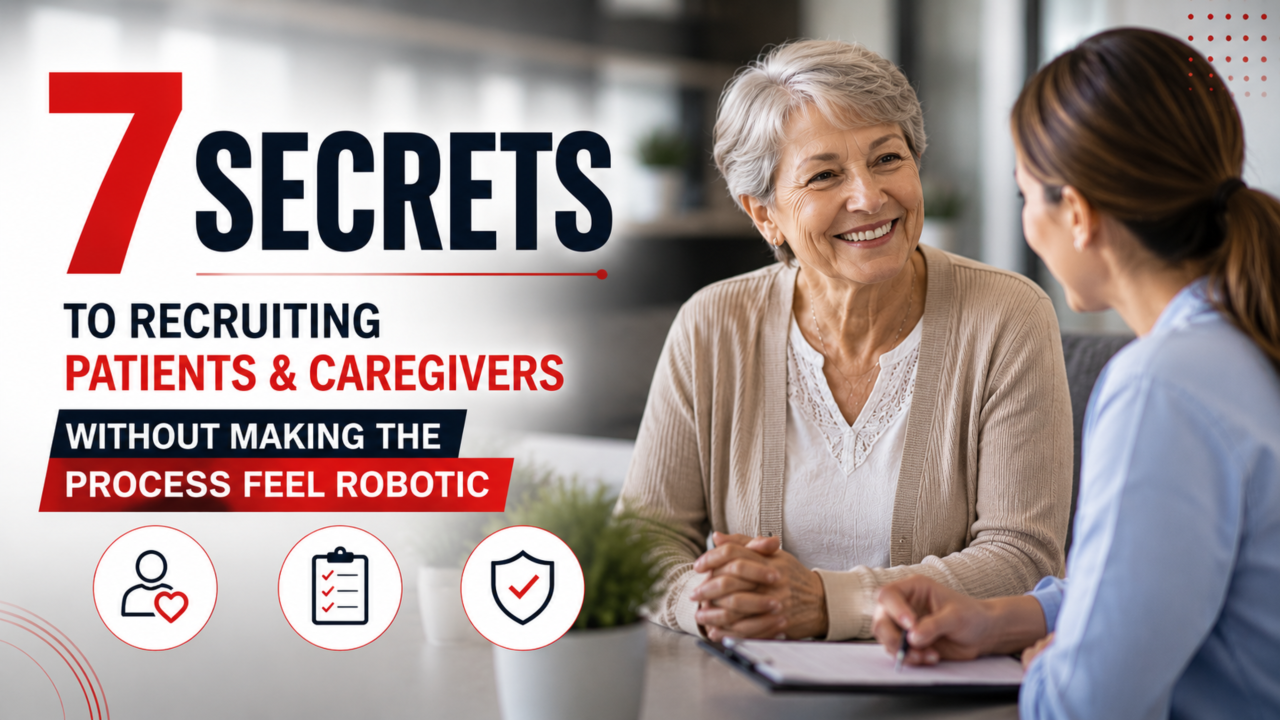
Patient and caregiver recruiting is not the place for cold, robotic outreach that sounds like it was assembled in a basement by a form letter.
These are real people with real experiences. Some are tired. Some are worried. Some are managing care for someone they love. The recruiting process has to protect quality and dignity at the same time.
So let’s get into the top 7 secrets, because the right humans change the whole decision.
1. Start with respect, not extraction
Do not make people feel like data points. Explain the study clearly, why their perspective matters, and what participation involves.
2. Use human language
Healthcare terms may be necessary, but outreach should still sound like a person wrote it. Clear beats clinical when trust is on the line.
3. Qualify gently but specifically
You can verify condition, treatment, role, or caregiving experience without making the conversation feel harsh. Tone matters.
4. Expect emotion in the process
Healthcare experience can be personal. Leave room for sensitivity, hesitation, and questions.
5. Make logistics easy
Appointment windows, reminder cadence, technology requirements, and payment details should be simple. Complexity creates drop-off.
6. Protect privacy visibly
People need to know their information will be handled carefully. Trust is part of recruitment quality.
7. Remember caregivers are experts too
Caregivers often understand routines, burdens, decisions, and tradeoffs that the patient may not see the same way. Their perspective can be essential.
How To Use This On Your Next Study
Before the next recruit launches, bring this list into the kickoff conversation. Pick the two or three secrets that feel most exposed in the current study, then decide who owns them before fieldwork begins.
For example, if the audience is senior or technical, focus on verification and sourcing. If the timeline is tight, focus on show-rate protection and backup recruits. If the incentive is high, focus on screener strength and fraud risk.
This is how respondent quality becomes part of the research plan instead of something everyone worries about after the first bad interview.
The Big Takeaway
The best patient and caregiver recruiting feels professional, clear, and human. That combination is what protects both the participant and the research.
The old way was to fill seats. The stronger way is to build a defensible sample: real humans, real qualifications, real insight. When a study is high-stakes, the recruiting process has to protect the business decision behind the research.
Need real, qualified people for your next high-stakes market research study?
Focus Insite helps Fortune 1000 teams recruit verified respondents for qualitative research, B2B research, UX research, healthcare research, product research, customer research, and hard-to-reach audience studies.
Business: Focus Insite
Website: www.focusinsite.com
Book a discovery call: fortune1000.focusinsite.com