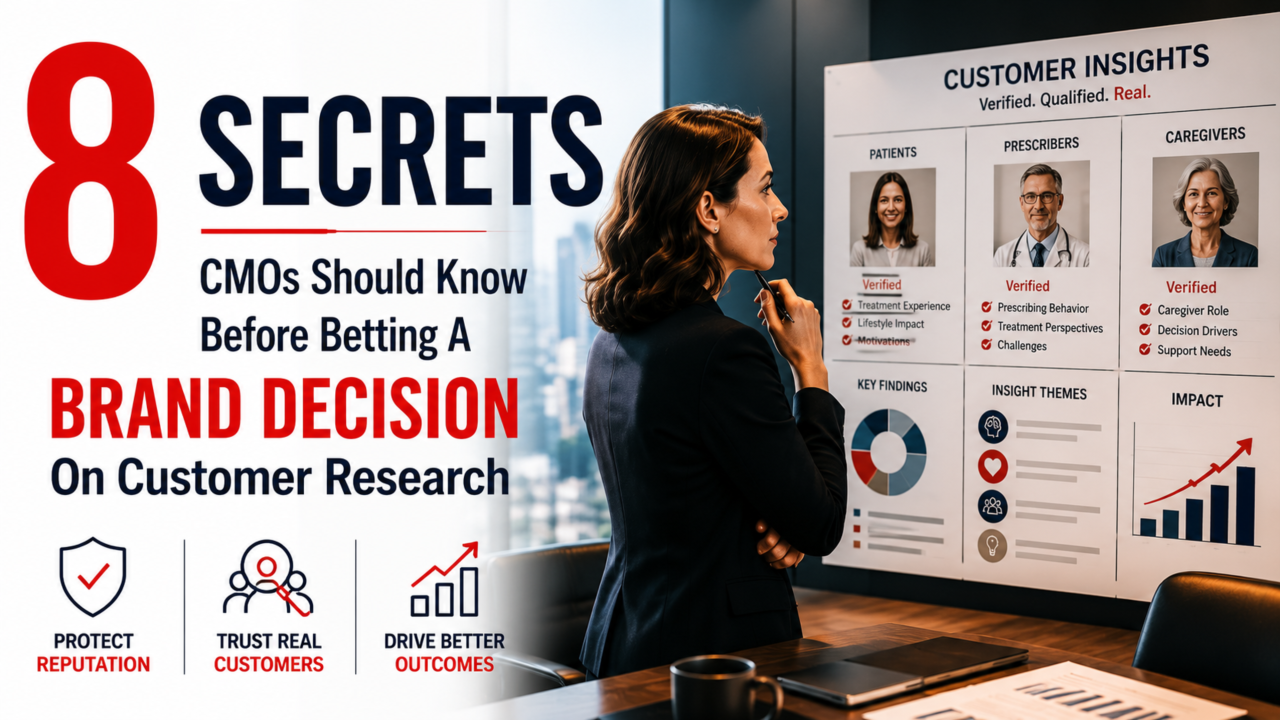
CMOs love customer insight. They also know the wrong customer insight can send a brand sprinting confidently in the wrong direction. Cute! Terrifying! Very expensive!
Before a Fortune 1000 brand acts on qualitative research, the team needs to know whether the people in the study actually represent the customers who matter.
So let’s get into the top 8 secrets, because the right humans change the whole decision.
1. Know which customer you are listening to
Current customers, lost customers, loyal fans, switchers, prospects, and category rejectors all tell different truths. Choose intentionally.
2. Do not confuse loud opinions with useful insight
Some participants are memorable because they are dramatic. That does not mean they represent the market reality.
3. Screen for behavior connected to the decision
If the decision involves switching, buying, renewing, or rejecting, the sample should include people with that relevant behavior.
4. Protect against brand familiarity bias
People who know the brand too well may answer differently from the broader target. Decide whether you need insiders, outsiders, or both.
5. Recruit beyond convenience
Easy-to-find customers may not be the ones shaping growth. A strategic recruit may need targeted outreach.
6. Separate emotion from entertainment
Great qualitative research captures emotion, but the sample still needs to be credible. A fun quote is not a strategy by itself.
7. Ask if the sample matches the business question
If the business question is about premium buyers, do not over-recruit bargain hunters. If it is about churn, do not only talk to loyalists.
8. Make the sample story boardroom-ready
When the brand decision is big, leaders need confidence in who was heard and why their input mattered.
How To Use This On Your Next Study
Before the next recruit launches, bring this list into the kickoff conversation. Pick the two or three secrets that feel most exposed in the current study, then decide who owns them before fieldwork begins.
For example, if the audience is senior or technical, focus on verification and sourcing. If the timeline is tight, focus on show-rate protection and backup recruits. If the incentive is high, focus on screener strength and fraud risk.
This is how respondent quality becomes part of the research plan instead of something everyone worries about after the first bad interview.
The Big Takeaway
Customer research should make a CMO braver, not just busier. The bravery comes from knowing the humans behind the insight are the right ones.
The old way was to fill seats. The stronger way is to build a defensible sample: real humans, real qualifications, real insight. When a study is high-stakes, the recruiting process has to protect the business decision behind the research.
Need real, qualified people for your next high-stakes market research study?
Focus Insite helps Fortune 1000 teams recruit verified respondents for qualitative research, B2B research, UX research, healthcare research, product research, customer research, and hard-to-reach audience studies.
Business: Focus Insite
Website: www.focusinsite.com
Book a discovery call: fortune1000.focusinsite.com