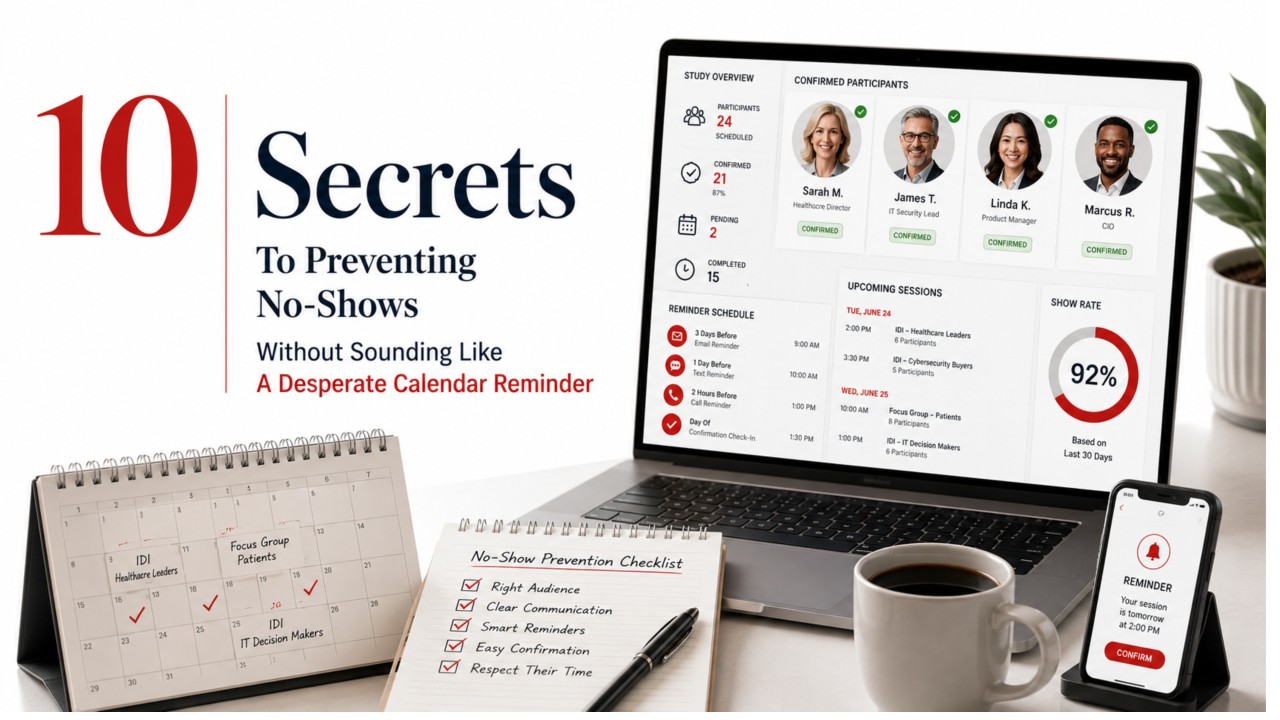
No-shows are tiny chaos grenades. One minute the schedule looks beautiful. The next minute everyone is asking if there is a backup, the moderator is waiting, and the project manager is aging in real time.
Show-rate protection is not about nagging people. It is about making the commitment clear, easy, credible, and worth keeping.
So let’s get into the top 10 secrets, because the right humans change the whole decision.
1. Confirm the commitment, not just the appointment
A calendar invite is not commitment. A real confirmation makes the participant actively acknowledge date, time, format, and expectations.
2. Make the study feel legitimate
People show up when they trust the process. Clear branding, professional communication, and human contact reduce uncertainty.
3. Explain the value of their voice
Participants are more likely to show when they understand why their input matters, not just what they will be paid.
4. Keep incentive details clear
Confusion creates friction. Tell participants what they earn, when they earn it, and what they need to do.
5. Send reminders with purpose
Reminders should be timed and useful: confirmation, day-before, day-of, and shortly before the session when appropriate.
6. Offer an easy reschedule path
Life happens. A participant who can reschedule easily may be saved instead of lost.
7. Watch for weak communication signals
Slow replies, vague answers, or missed confirmations may indicate show risk. Flag them early.
8. Build backup recruits into high-stakes studies
Backups are not waste. They are insurance against schedule collapse.
9. Use human follow-up where it counts
For senior, medical, or hard-to-reach audiences, a real human touch can protect attendance better than automation alone.
10. Track show-rate patterns by source
Some channels produce better attendance than others. Track it. Learn from it. Improve the next recruit.
How To Use This On Your Next Study
Before the next recruit launches, bring this list into the kickoff conversation. Pick the two or three secrets that feel most exposed in the current study, then decide who owns them before fieldwork begins.
For example, if the audience is senior or technical, focus on verification and sourcing. If the timeline is tight, focus on show-rate protection and backup recruits. If the incentive is high, focus on screener strength and fraud risk.
This is how respondent quality becomes part of the research plan instead of something everyone worries about after the first bad interview.
The Big Takeaway
Better show rates come from better commitment design. When participants feel clear, respected, and confirmed, the whole study runs smoother.
The old way was to fill seats. The stronger way is to build a defensible sample: real humans, real qualifications, real insight. When a study is high-stakes, the recruiting process has to protect the business decision behind the research.
Need real, qualified people for your next high-stakes market research study?
Focus Insite helps Fortune 1000 teams recruit verified respondents for qualitative research, B2B research, UX research, healthcare research, product research, customer research, and hard-to-reach audience studies.
Website: www.focusinsite.com
Book a discovery call: fortune1000.focusinsite.com