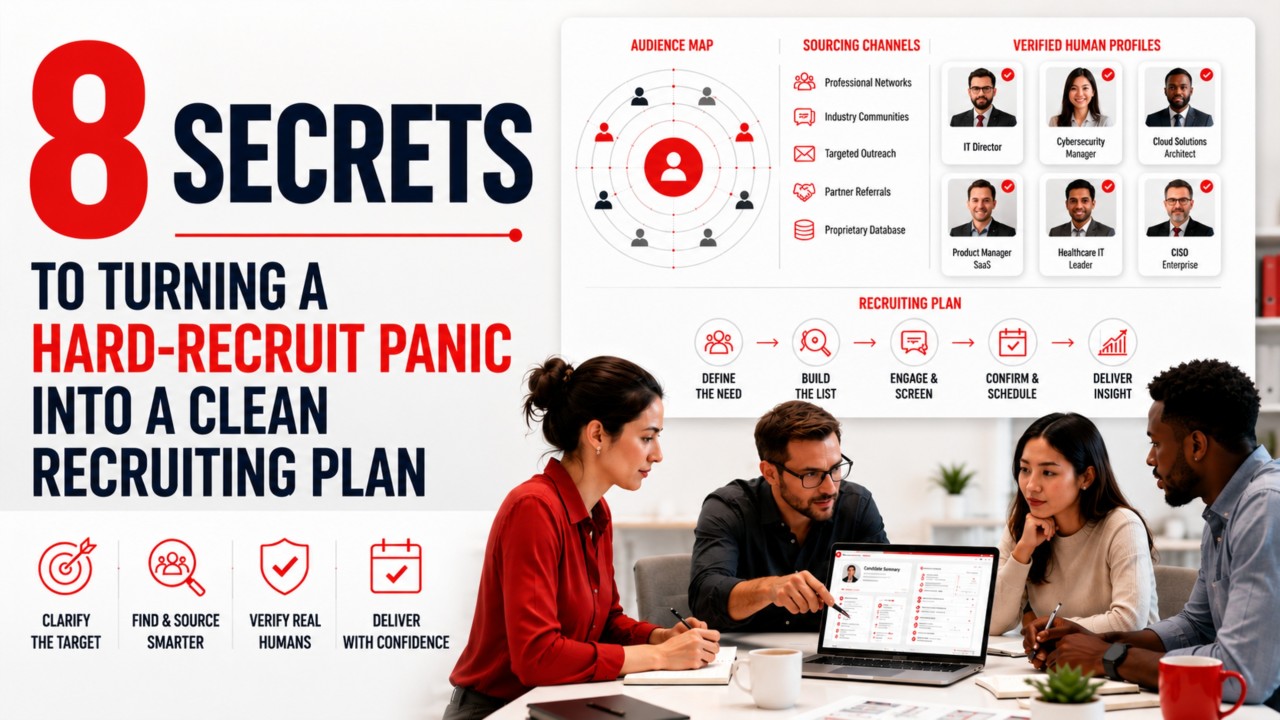
Every research team eventually meets The Recruit From Hell. The audience is niche. The timeline is rude. The stakeholder is nervous. The incentive is being debated in a thread with 19 people. Fun!
Hard recruits are not impossible. They just punish vague planning. The teams that win slow down for a moment, pressure-test the path, then move with focus.
So let’s get into the top 8 secrets, because the right humans change the whole decision.
1. Name the hardest constraint first
Every hard recruit has a main villain. It may be seniority, geography, diagnosis, purchase behavior, category usage, privacy, or timeline. Name it early so the plan can solve the real problem.
2. Stop assuming the audience is in one place
Hard-to-reach respondents may live across panels, referrals, communities, professional groups, patient networks, events, or direct outreach. The sourcing plan should be multi-channel by design.
3. Separate must-haves from nice-to-haves
Stakeholders often want the perfect respondent. Great. But perfection has cost and timeline implications. Decide what is essential before the recruit starts bending under pressure.
4. Pressure-test the incentive
A hard recruit usually needs a thoughtful incentive. Too low and the right people ignore it. Too careless and the wrong people flood it. Incentive strategy is part of quality control.
5. Build a screener that earns trust
Hard audiences need careful questions. The screener should prove relevance without feeling like a tax audit. Clear, respectful, experience-based screening does both.
6. Create a backup plan before you need it
Backups are not pessimism. They are project management. A hard recruit without backup paths is basically a suspense movie.
7. Communicate feasibility honestly
Clients and stakeholders can handle reality better than surprises. If the audience is difficult, say so early with options, tradeoffs, and recommendations.
8. Track quality, not just completes
The scoreboard should include qualified fits, source quality, show risk, disqualification reasons, and weak spots. Completes matter, but quality explains whether the project is actually safe.
How To Use This On Your Next Study
Before the next recruit launches, bring this list into the kickoff conversation. Pick the two or three secrets that feel most exposed in the current study, then decide who owns them before fieldwork begins.
For example, if the audience is senior or technical, focus on verification and sourcing. If the timeline is tight, focus on show-rate protection and backup recruits. If the incentive is high, focus on screener strength and fraud risk.
This is how respondent quality becomes part of the research plan instead of something everyone worries about after the first bad interview.
The Big Takeaway
A hard recruit becomes manageable when the team stops wishing it were easy and starts building the right plan for the real audience.
The old way was to fill seats. The stronger way is to build a defensible sample: real humans, real qualifications, real insight. When a study is high-stakes, the recruiting process has to protect the business decision behind the research.
Call To Action
Need real, qualified people for your next high-stakes market research study?
Focus Insite helps Fortune 1000 teams recruit verified respondents for qualitative research, B2B research, UX research, healthcare research, product research, customer research, and hard-to-reach audience studies.
Business: Focus Insite
Email: [email protected]
Website: www.focusinsite.com
Book a discovery call: fortune1000.focusinsite.com